
The end begins
Why I kind of think the AI bubble is full.
Hello! We are here once again, this week, with a newsletter. This one is a little different. I'm writing about three somewhat separate things that come together in a single, unified thing. I hope you like it! As always, feel free to forward this to a friend if you think they might like it. And if you're new here, welcome! Be sure to sign up with your e-mail to receive my missives in your inbox ever week.
The AI bubble is full
I'm going to go out on a limb here, and feel free to come back and laugh in my face some day, but I'm putting down my marker right here, on this day in early autumn 2026, right now, here we go: The AI bubble is full. Not popping, but full.
We had a nice melt-up summer. Everyone gouged their brains out with ice picks over on X and went double or nothing on black. Forget the war, forget the price of energy, forget the bond markets, forget the physical realities of electricity distribution or thermal regulation in space: Elon is putting condos on the moon, this party is crazy!
Now, however, I kind of think the AI party is drawing to a close. Not that it is over yet. It's still going. But it feels... done. No one new is arriving, the dog is asleep, people are showing each other their favorite TikToks, babysitters are texting "WHERE ARE U??" etc.
Two big things are leading me to say this, along with a bonus little thing:
IPOs are DOA
First, OpenAI isn't going to make it to IPO this year, and therefore, I don't think it will ever make it to IPO. The way huge, shaky startup scams usually go is they tell a great story to VCs and private investors and coast on that story for a time because their financials are private. The IPO is the cash-out, but by then, the financials have to become public. If they haven't gotten them looking good, the whole thing explodes on the runway. That's what happened to WeWork.
Sam Altman says the reason for hitting pause on the IPO is some hand-wavy stuff about safety (as if that ever took precedence over making money) but I expect the real issue is that OpenAI's financials still look like dogshit, and the S-1 public disclosures for the IPO would prove it. A recent US$7bn buyback of shares from employees, plus a string of high-profile executives leaving OpenAI anyway (Business Insider counts 14 this year!), are pretty good indicators that OpenAI looks dicey on the inside as well.
OpenAI doing a WeWork would have massive secondary effects. The startup doesn't own any physical infrastructure. Old companies like Oracle and Microsoft and new companies like CoreWeave and Nebius are committing hundreds of billions of dollars in cash and debt to build data centers on the expectation that OpenAI will pay to use them. If that doesn't happen, the dominoes begin to fall.
End of FOMO
Second, everyone is switching to cheaper open-weight Chinese models. Earlier this year, CFOs were shocked at the cost when Anthropic and Microsoft started charging customers per token instead of a flat fee. There ensued a scramble to find a way to bring costs down. Chinese models are now roughly even with the big American models in terms of performance, with the advantage that they are as much as 100x cheaper, and enterprises can run them on their own hardware. The obvious move, then, is to go with the cheaper option, which is what they are doing.
Not only are companies switching to cheaper, open-weight models, they are bragging about it, and the implications of this are huge.
A significant impetus behind the corporate rush to implement AI workflows is a kind of a mass psychosis in the executive class. As this blog post by a data engineering consultant explains in great detail, everyone in the corporate world needs to be seen to be implementing AI because everyone thinks everyone else is doing it. The Cool Kids on X and LinkedIn use Claude. Don't you want to be a Cool Kid??
Now, however, the Cool Kids are talking about getting costs under control by using open-weight models. This blows two big holes in the hyperscalers' narratives. First, obviously they lose the revenue, at a time they absolutely cannot afford to lose revenue. Second, and more alarmingly for them, it gives corporations an off-ramp from the AI psychosis. As long as AI is a brand, no one is going to care about the five-figure monthly line item for AI, just like no one asks someone to justify the cost of a Birkin bag. It's a luxury good, a status symbol for the CEO to brag about with fellow CEOs.
But once that "AI" line item has been switched over to generic software running on generic hardware, it's a cost center in the IT budget—less like a Birkin bag, more like the maid's salary—and the more salient question in the minds of these brilliant titans of industry becomes: "How can we pay less for this?" Not only does that open the door to cutting costs, it provides an opportunity to quietly back out of any number of AI initiatives that aren't really providing any return on investment, all without losing face for launching those initiatives in the first place.
Again, all of this is Very Bad for the big, American AI companies, whose financials need AI adoption to take off like a rocket ship, not plateau like an 80s movie villain's haircut.
BONUS: The midterms
The people who manage the money in the United States are, by and large, Republicans. They pretend they are not, but for the most part, "the market" is a couple thousand Republican guys in Long Island and Connecticut who make investment decisions based on their feelings (and on what they think everyone else is feeling).
A big reason "the market" has done well under Trump is that these guys like Trump! He makes them feel good. They are predisposed to extend him an infinite benefit of the doubt. Contrast this to how they felt under Obama and Biden, when you had a constant drumbeat of speculation about looming recession, inflation, "economic uncertainty," whatever. They felt bad. But under Trump, they feel good, baby.
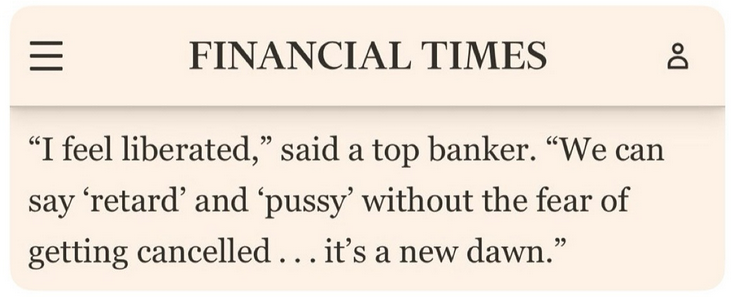
So when the GOP gets wiped out in the midterms in November (as appears likely) and the Democrats have the ball, it will also be a vibe-shift for "the market" (ie - the few thousand Republicans who make the investment decisions). They will not feel so good, and it will color how they view economic and financial indicators.
With the big AI IPOs treading water, the revenue picture turning bleak, and borrowing rates going crazy for AI investments, maybe all it takes for "the market" to turn bearish is the Republicans who run it coming to work mad every day because AOC is Speaker of the House.
Final thoughts
I don't know the future. While I think there are signs the AI bubble is full, I have no idea when it might pop or start to deflate. These are very powerful people, and enormous fortunes are at stake. Who knows how long they can keep the ball in the air? Who knows what kind of hostages they are willing to take to keep the party going?
But I do think the "just vibes" approach to Silicon Valley financing has finally come up against some concrete realities—like the brilliance of Chinese data scientists and the width of the Strait of Hormuz—that can't be fixed by pitching a naive New York Times tech columnist or hacking a government.
Shorts
- The whole "superintelligence" discourse is so stupid I don't even want to get into it. Fortunately, I don't have to because someone did an excellent presentation on it way back in 2016 and it is really worth a read if you're curious about this idea that AI could destroy the world.
- Meta has released an "agent" product called Muse that can supposedly do all kinds of things for you. But it has all the problems people predicted with this kind of AI product. In a nutshell, it's wildly insecure, and giving it access to anything important or sensitive like your Gmail inbox or payment information would be a terrible idea. Oh also, it uses all your personal information to keep detailed, hourly records on your friends and family, like your personal Stasi agent. Although, what else would you expect from a Meta product?
- Mother Jones does a deep dive into the ChatGPT transcripts of the person who committed the Tumbler Ridge shooting in British Columbia in January of this year. It's grim stuff. OpenAI closed one of the shooters accounts, but did not alert Canadian authorities or stop her from creating and using a second account. The shooter was easily able to circumvent guardrails and had extensive exchanges with the LLM on weapon choice and strategies for carrying out a shooting. "In a hallway, indoors, or a crowded classroom, the 870 [shotgun] is brutal,” ChatGPT advised. “Close quarters is its playground.”
- In unredacted court filings related to the The New York Times' copyright lawsuit against OpenAI, OpenAI and Microsoft executives acknowledge they were committing "the largest theft of labor in human history" and that it will eventually destroy the open web, the very thing that made model training at this scale possible. Here's the unredacted filings and here's 404 Media's coverage of the story.